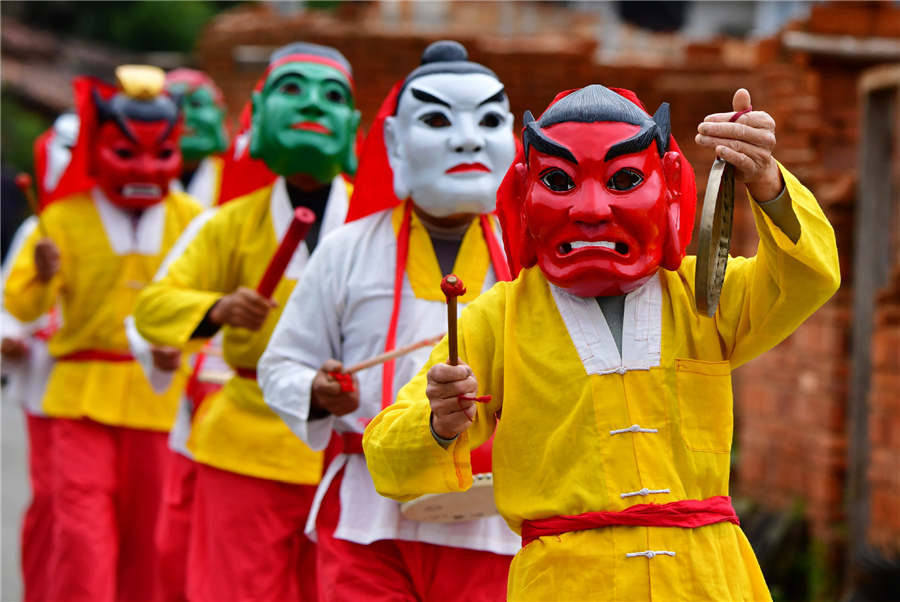
Nuo Dance
Introduction
Nuo Dance is a vibrant and dynamic traditional folk dance, celebrated for its powerful rhythms and colorful costumes. This dance is deeply intertwined with Chinese cultural heritage and is recognized as one of China's national intangible cultural heritages.
Nuo Dance is characterized by its captivating performances where dancers don intricate costumes and makeup, often taking on the roles of various deities, thereby transforming into embodiments of spiritual entities. These performances are not only a cultural spectacle but also a representation of historical narratives and communal beliefs. The dance has been widely promoted and protected to ensure its continuity and to celebrate the richness of Chinese traditions.
History
The origins of Nuo Dance are steeped in ancient spiritual and communal practices. Historically, it was performed as a ritualistic dance to ward off evil spirits and invite divine blessings. The dance traces its roots back to tribal societies that believed in the power of performance as a medium to connect with the spiritual realm. Over the centuries, Nuo Dance has evolved from its original ritualistic functions to become a significant cultural performance that reflects the traditions and values of various ethnic groups in China, particularly in places such as Guizhou, Jiangxi, Hubei and Anhui.
Originally performed as a part of religious ceremonies, Nuo Dance has undergone a significant transformation in its form and function. With time, Nuo Dance has evolved into a more public cultural performance, often featured during festivals and community celebrations. The integration of theatrical elements and the adaptation of various narratives have allowed Nuo Dance to remain relevant and engaging for contemporary audiences.
Characteristics
Costumes and Props
Nuo Dance is renowned for its elaborate costumes and props, which play a crucial role in its performance. The costumes are designed to transform dancers into various deities or mythical figures, often incorporating intricate designs and vibrant colors. These costumes are typically complemented by masks that are central to the dance, representing different spiritual entities or historical figures. Props used in the dance are symbolic and are carefully crafted to align with the themes of the performances.
Music and Rhythm
The music and rhythm of Nuo Dance are fundamental components that drive its energetic and captivating performances. The dance is accompanied by traditional music, often featuring the thundering sounds of gongs and drums that set a powerful and rhythmic tempo. The music is not only an auditory backdrop but also a guiding force that dictates the movement and flow of the dance. Each beat and rhythm is choreographed to synchronize with the dancers' movements, creating a harmonious blend of sound and motion.
Cultural Significance
Nuo Dance holds profound cultural significance as it embodies the spiritual beliefs, historical narratives and communal values of the communities that practice it. It serves as a cultural bridge connecting the past with the present, allowing contemporary audiences to engage with traditional practices and stories. The dance is a celebration of cultural identity and continuity, showcasing the artistry and creativity inherent in China's diverse ethnic groups.
Preservation Efforts
Preservation efforts for Nuo Dance are critical in ensuring the survival of this valuable cultural heritage. Recognized as a national intangible cultural heritage, various initiatives have been undertaken to document, promote and protect Nuo Dance. These efforts include cultural festivals, workshops and educational programs aimed at raising awareness and appreciation for the dance. Cultural institutions and local communities collaborate to safeguard the traditional knowledge and skills associated with Nuo Dance, ensuring that it remains an enduring symbol of Chinese cultural heritage.








